
Audit Exposure Starts Early: How January Hiring Impacts OFCCP Readiness
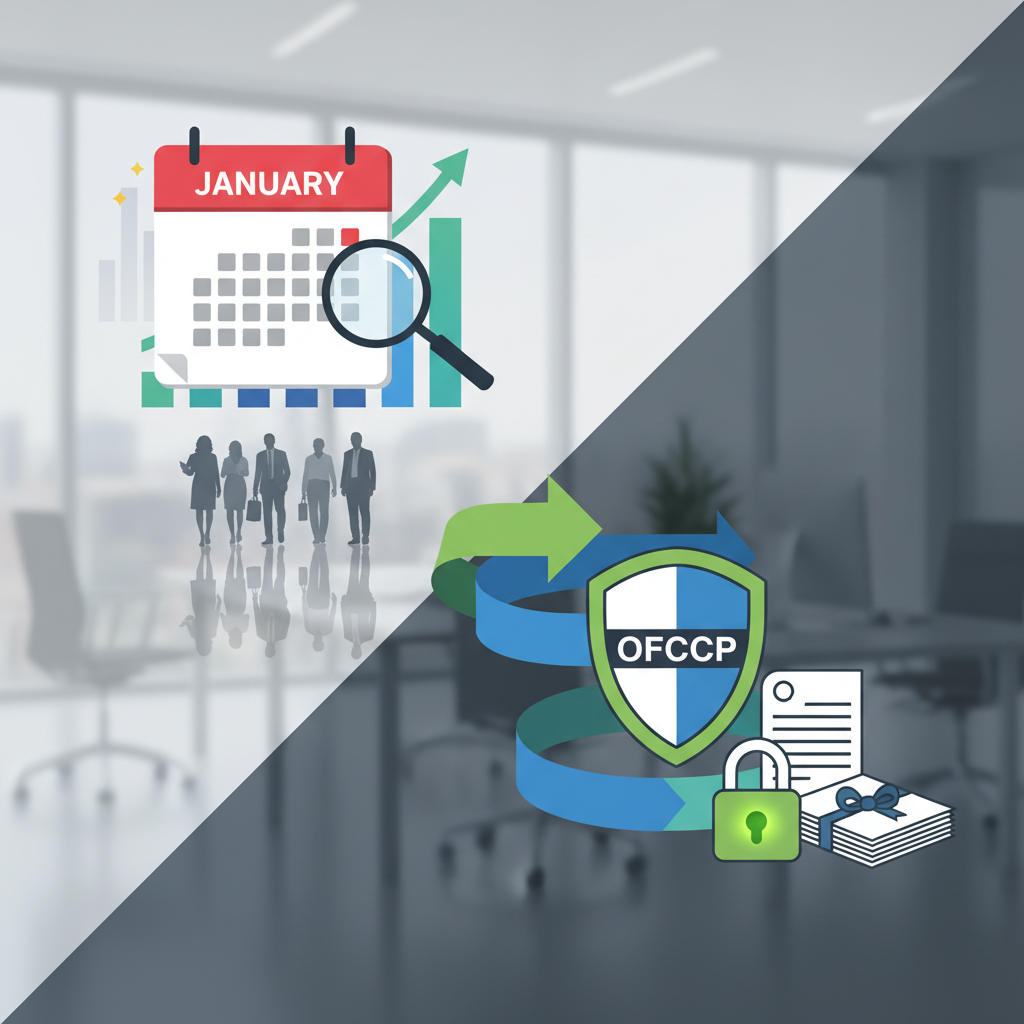
All right, let’s discuss January. For many companies, it’s a frantic hiring blitz. New year, new budget, new ambitious goals, right? Everyone’s scrambling to fill open roles, kick off major projects, and hit the ground running. You’re probably thinking, “Great, get ’em in, get ’em working.” And I get it. But here’s the thing: that January hiring scramble? It’s often the precise moment you unwittingly lay the groundwork for some serious OFCCP audit exposure.
It sounds counterintuitive, I know. How can simply hiring people — the very thing that drives growth — put you at risk? Well, because OFCCP compliance isn’t just about what you do; it’s about how you do it, and critically, how you document every single step. And in the rush of January, those critical steps often get, shall we say, overlooked. Ignoring this can turn a successful hiring spree into a regulatory headache faster than you can say “federal contractor.”
The January Rush: Your First OFCCP Red Flag
Many federal contractors and subcontractors look at January as a fresh start, a clean slate. Budgets are approved, headcount demands are firm, and the pressure is on to recruit. This urgency, while understandable from a business perspective, frequently leads to shortcuts in the hiring process. And OFCCP? They’re looking for meticulous, consistent processes, especially for OFCCP compliance with job posting requirements.
Think about it. Are your recruiters, often under intense pressure to fill roles, consistently checking all the compliance boxes for every single posting? Are they retaining all the applicant data they should be? Are they ensuring that outreach efforts are properly documented to meet those veteran and disability hiring goals? What I’ve found, over years in this game, is that the answer is often a resounding “Nope.” And that’s exactly where the audit risk begins.
Why Your Job Postings Are OFCCP’s Starting Point
Your job postings are more than just advertisements; they’re the initial footprint of your hiring process. For federal contractors, they’re the first line of defense (or offense) in an OFCCP audit. The agency scrutinizes these postings right down to the nitty-gritty details. Missing even a single piece of information can be problematic. For instance, did you know that federal contractors are required to list all suitable employment openings with the appropriate state workforce agency? And they need proof. Many companies are excellent at Craigslist bulk job postings for reach, but fall short on these specific, less glamorous compliance tasks.
The OFCCP wants to see that:
- You’re casting a wide, inclusive net, not just hitting your usual suspects.
- Your postings include specific language encouraging protected veterans and individuals with disabilities to apply.
- You’re correctly routing applicants to ensure proper data collection, even if they apply through a third-party site.
- Every single job opening is treated as an opportunity for equitable consideration.
This isn’t something you can just ‘add in later.’ It needs to be integrated into your job posting workflows from day one, especially when you’re doing a high volume of hires early in the year.
The Paper Trail (or Lack Thereof)
An OFCCP audit is, at its heart, an exercise in record-keeping. They want to see proof of everything you claim to be doing. If your January hiring spree generated hundreds of applications, how are you tracking:
- Applicant flow: Who applied, from where, when, and their protected class data (e.g., race, gender, veteran status, disability status)?
- Hiring decisions: Why was candidate A chosen over candidate B? What objective criteria were used?
- Outreach efforts: What specific organizations did you partner with to reach veterans and individuals with disabilities? What were the results?
- Job advertisement placements: Where was each job posted? How long did it run? Did it meet state workforce agency requirements (like those mandatory priority referral requests for veterans)?
You might be thinking, “But we use an ATS!” Good. Is your ATS configured to capture all of this data with OFCCP in mind? Many aren’t, or they’re not used consistently by recruiters who are just trying to fill seats. This is a common pitfall and one that leading organizations proactively address, as highlighted in articles from institutions such as McKinsey on operational excellence.
The Risks of Unchecked January Hiring Practices
When you rush through the hiring process in January without a robust, compliant job distribution strategy, you’re not just cutting corners; you’re actively creating potential liabilities. Here are some of the big ones:
1. Disparate Impact Claims
If your January hires unintentionally show a pattern of underrepresentation for certain protected groups, and your tracking is shoddy, it becomes incredibly difficult to defend yourself against a disparate impact claim. The OFCCP looks at selection rates. If your hiring process consistently screens out a higher percentage of, say, female applicants or applicants over 40 (even without intent), you’ve got a problem. And without proper documentation of your recruitment and screening, you’re essentially naked in an audit.
2. Failure to Meet Affirmative Action Obligations
Federal contractors have specific affirmative action obligations related to veterans and individuals with disabilities. This isn’t just about hiring; it’s about actively recruiting, employing, and advancing these groups. If your January postings didn’t include the right language, weren’t distributed to the right places (e.g., local veterans’ organizations, disability service providers), or you can’t demonstrate these efforts with solid data, you’re missing the mark. Even Entrepreneur articles often stress the importance of proactive compliance for sustainable business growth.
3. Record-Keeping Violations
This is probably the most common audit finding. The OFCCP requires specific records to be kept for a minimum of two years (or more, depending on the number of employees). This includes applications, résumés, interview notes, tests, and any other materials related to hiring decisions. In a January rush, it’s easy for these items to get lost, fragmented across different systems, or not collected with the required diligence. As Harvard Business Review often points out, strong administrative processes underpin all successful initiatives.
4. Lost Contract Opportunities and Fines
Non-compliance can lead to hefty fines, debarment from future federal contracts, and significant reputational damage. It can stall your business growth and cost you far more than investing in a proper job board and compliance system from the beginning. Imagine losing a multi-million-dollar government contract because your January hiring process cut corners on veteran outreach. This stuff is real.
The Proactive Playbook: Getting OFCCP Ready *Before* January
Look, the good news is you don’t have to live in fear of an audit. You just need to be smart, strategic, and organized. Here’s a quick playbook:
1. Standardize Your Job Posting Process (and actually enforce it)
Every job, whether for a senior executive or an entry-level technician, must follow the same OFCCP-compliant process. This means:
- Mandatory language: Ensure all postings include EEO/AA statements, veteran/disability invites, and job ID numbers.
- Consistent distribution: Don’t leave it to individual recruiters. Use a system that automatically distributes to the required state workforce agencies and other diversity-focused sites.
- Centralized tracking: All postings, including their dates, locations, and unique IDs, should be stored in a single, easily auditable location. This is where a robust job posting software really shines.
2. Automate Compliance Where Possible
Human error is real, especially under pressure. Automation is your best friend for OFCCP compliance. For example:
- Automated SWA reporting: Software can often handle the routine listing of jobs with state workforce agencies, providing you with the exact proof you need.
- Auto-inclusion of EEO/AA language: Set up templates to prevent recruiters from accidentally omitting critical compliance phrases.
- Consistent data capture: Ensure your application process consistently asks for voluntary self-identification data (ethnicity, race, gender, veteran status, disability status) in a compliant manner. Forbes frequently highlights how technology can streamline complex regulatory tasks.
3. Train Your Teams and Audit Internally
Even the best systems fail if people don’t know how to use them or why they’re important. Regular OFCCP compliance training for your HR and recruiting teams is non-negotiable. More importantly, conduct periodic internal audits. Don’t wait for the OFCCP to find your weaknesses. Proactively review your:
- Job posting content and distribution logs.
- Applicant tracking data for completeness and consistency.
- Record retention policies and practices.
Think of it like a dress rehearsal. Finding and fixing issues internally is far less painful than having an auditor do it for you, which could lead to findings or even show-cause notices. Gartner often emphasizes the importance of internal checks and balances for robust compliance frameworks.
4. Embrace Data-Driven Outreach
The OFCCP wants to see good-faith efforts through proactive outreach. Don’t just post and pray. Actively seek partnerships with organizations serving veterans, individuals with disabilities, and other underrepresented groups. Track these relationships. Measure the results. If a partnership isn’t yielding diverse applicants, re-evaluate and try new avenues. This strategic approach to sourcing is a hallmark of successful diversity & inclusion initiatives, which OFCCP compliance directly supports.
The Bottom Line on January Hiring and OFCCP Readiness
Your January hiring activities aren’t just about filling quotas; they’re about building the foundation of your future workforce and, critically, setting your compliance baseline for the entire year. Cutting corners early creates a ripple effect of issues that can follow you through subsequent quarters and make an audit a truly dreadful experience. Auditors don’t care that you were busy or that you had tight deadlines. They care about compliance, period.
So, as you gear up for the next hiring push, ask yourself: Is our OFCCP readiness baked into our process, or is it an afterthought? When the audit letter arrives, the answers to those questions will make all the difference. Investing in proactive, compliant Job Distribution Software isn’t just about avoiding penalties; it’s about creating a fair, equitable, and sustainable hiring ecosystem. For federal contractors navigating these complex waters, leveraging a trusted Job Multi-Poster Platform like dstribute Job Distribution and Multi Posting can transform your compliance posture from reactive to practically bulletproof, allowing you to focus on growth without the constant fear of audit exposure.