
Automating State Workforce Agency Posts For OFCCP Compliance
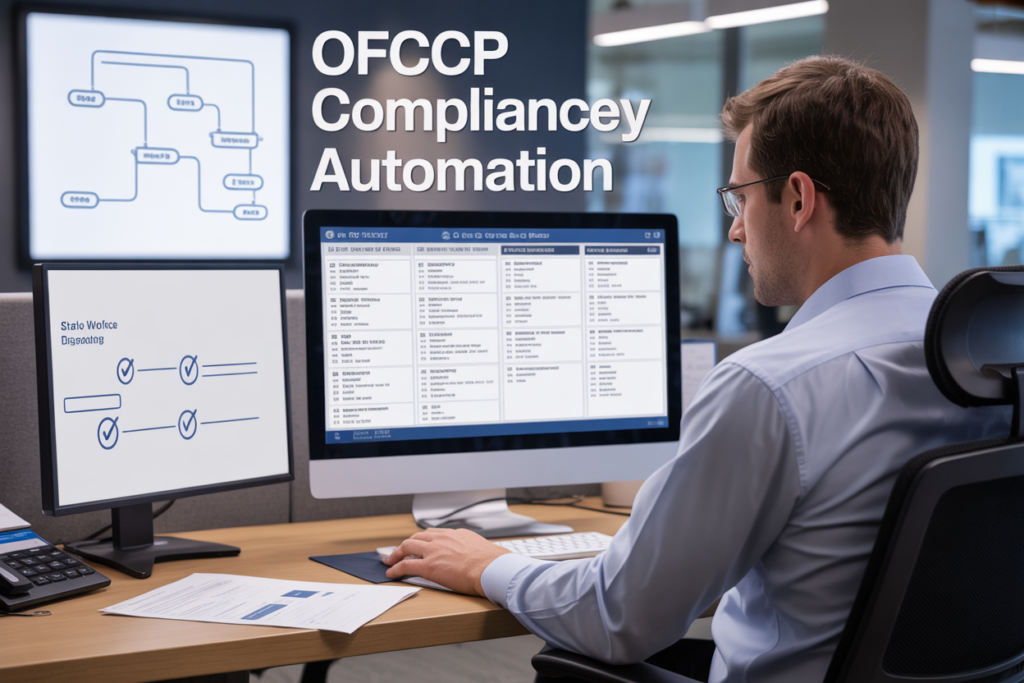
Federal contractors face mounting pressure to meet OFCCP compliance requirements while managing complex job posting obligations across multiple state workforce agencies. Manual posting processes drain resources, create compliance gaps, and leave HR teams scrambling to track requirements across dozens of different state platforms.
This guide is for HR professionals, compliance managers, and federal contractors who need to streamline their OFCCP posting requirements while reducing administrative burden and compliance risk.
We’ll walk through the core challenges of manual state workforce agency posting management that keep compliance teams up at night. You’ll discover the key features that make automated job posting solutions game-changers for OFCCP compliance automation. Finally, we’ll share practical implementation strategies that help you roll out workforce agency posting automation systems without disrupting your current hiring processes.
Ready to transform your compliance headaches into automated success? Let’s dive into how OFCCP compliance software can revolutionize your posting strategy.
Understanding OFCCP Compliance Requirements for Job Postings
Federal Contractor Obligations Under Executive Order 11246
Federal contractors with 50 or more employees and contracts exceeding $50,000 must comply with Executive Order 11246, which establishes comprehensive equal employment opportunity requirements. These obligations extend beyond simple non-discrimination practices to include proactive affirmative action measures and specific job posting protocols.
OFCCP compliance automation becomes critical when managing the complex web of posting requirements across multiple jurisdictions. Contractors must ensure all job openings are posted to the appropriate state workforce agencies within designated timeframes, typically ranging from 24-72 hours, depending on the state. The regulation requires that postings remain active for specific durations, often 30 days minimum, creating ongoing compliance monitoring challenges.
The order also mandates that contractors maintain detailed records of their recruitment efforts, including documentation of where and when positions were posted. This creates substantial administrative overhead when handled manually, particularly for organizations with high-volume hiring across multiple states.
State Workforce Agency Posting Mandates and Timelines
Each state maintains unique posting requirements that federal contractors must navigate carefully. Automated job posting solutions help manage these varying mandates, which can include specific formatting requirements, mandatory fields, and distinct submission processes for different state workforce agencies.
Most states require postings within 24-48 hours of job creation, though some allow up to 72 hours. Timing requirements become particularly complex for multi-state employers who must track different deadlines simultaneously. Automated compliance posting systems eliminate manual tracking errors and ensure consistent adherence to these varying timelines.
State-specific requirements often include salary range disclosure, equal opportunity statements, and specific job classification codes. Workforce agency posting automation ensures these elements are automatically included and properly formatted for each jurisdiction’s unique requirements.
Documentation Requirements for Audit Protection
OFCCP compliance software must maintain comprehensive audit trails documenting every aspect of the posting process. This includes timestamps showing when positions were posted to each state workforce agency, confirmation receipts from posting submissions, and records of how long postings remained active.
Documentation extends beyond basic posting records to include recruitment source effectiveness data, applicant flow information, and detailed logs of any system modifications or posting updates. These records serve as critical evidence during OFCCP compliance reviews and audits.
Automated systems provide superior audit protection by maintaining consistent, tamper-proof records that manual processes cannot match. The documentation must demonstrate reasonable faith efforts to reach diverse candidate pools through appropriate state workforce agency channels.
Penalties for Non-Compliance and Enforcement Trends
OFCCP enforcement has intensified significantly, with penalties ranging from contract cancellation to debarment from future federal contracting opportunities. Recent enforcement trends show increased scrutiny of posting compliance, particularly regarding timing and geographic coverage requirements.
Financial penalties can reach millions of dollars for systemic violations, while back-pay settlements for affected workers add substantial costs. The reputational damage from public enforcement actions creates additional business risks that extend beyond direct financial penalties.
OFCCP compliance management systems help organizations avoid these severe consequences by ensuring consistent, compliant posting practices across all locations and positions. The investment in automated solutions typically represents a fraction of potential penalty costs, making compliance automation a sound business decision for federal contractors.
Challenges of Manual State Workforce Agency Posting Management
Time-consuming multi-state posting processes
Managing job postings across multiple state workforce agencies manually creates a logistical nightmare for federal contractors. Each state operates its own workforce agency portal with unique registration requirements, posting formats, and submission protocols. HR teams often spend hours navigating different interfaces, creating separate accounts, and reformatting job descriptions to meet varying state specifications.
The complexity multiplies when contractors operate in dozens of states. What begins as a simple job posting transforms into a full-time administrative burden. Staff members must research individual state requirements, adapt posting content for each platform, and manually submit applications through disparate systems. This process can take several days for a single position, dramatically slowing recruitment timelines and increasing operational costs.
Tracking compliance deadlines across jurisdictions
OFCCP compliance demands strict adherence to posting timelines, but tracking deadlines across multiple jurisdictions presents significant challenges. Each state workforce agency has different posting duration requirements, ranging from 30 days to more extended periods. Manual tracking systems rely on spreadsheets or basic calendar reminders that frequently fail to account for weekends, holidays, and varying state-specific timelines.
Missed deadlines create serious compliance risks. Federal contractors face potential audits and penalties if they fail to meet OFCCP posting requirements within the specified timeframes. HR personnel struggle to maintain accurate records of posting dates, removal deadlines, and compliance documentation across numerous states simultaneously. This manual approach leaves contractors vulnerable to oversight failures that could trigger regulatory scrutiny.
Human error risks in posting accuracy
Manual posting processes introduce multiple opportunities for errors that can compromise OFCCP compliance. Staff members may accidentally omit required equal opportunity language, post incorrect salary ranges, or fail to include essential job qualifications when transferring information between systems. Copy-paste errors between different state portals can result in inconsistent job descriptions that don’t meet federal contractor posting standards.
Inconsistent formatting across state workforce agency platforms increases the likelihood of errors. When employees manually adapt content for different systems, critical compliance elements may be accidentally modified or deleted. These errors often go unnoticed until compliance audits reveal discrepancies between posted positions and OFCCP requirements, potentially resulting in costly violations and remediation efforts.
Resource allocation inefficiencies
Manual state workforce agency posting management drains valuable HR resources that could be better allocated to strategic recruitment activities. Organizations typically assign dedicated staff members to handle posting logistics rather than focusing on candidate sourcing and relationship building. This misallocation of human capital reduces overall recruitment effectiveness and increases per-hire costs.
The repetitive nature of manual posting creates employee burnout and reduces job satisfaction among HR teams. Staff members spend countless hours on administrative tasks rather than engaging in meaningful recruitment work. Organizations often need additional personnel specifically to manage posting compliance, inflating department budgets without improving recruitment outcomes. These resource allocation inefficiencies compound over time, creating unsustainable operational models for growing federal contractors.
Key Features of Automated Posting Solutions
Multi-state integration capabilities
Modern OFCCP compliance automation platforms excel at managing the complex landscape of state workforce agency posting requirements across multiple jurisdictions. These systems connect directly with dozens of state job boards and workforce development agencies, eliminating the need for manual submissions to each platform. Federal contractors operating in multiple states benefit from unified dashboards that display posting requirements, deadlines, and status updates for every relevant jurisdiction.
The integration capabilities extend beyond simple job board connections. Advanced automated compliance posting systems synchronize with state-specific formatting requirements, ensuring job descriptions meet each state’s minimum wage disclosure, benefits information, and equal opportunity statement requirements. This level of integration prevents common compliance gaps that occur when contractors manually adapt postings for different state requirements.
OFCCP compliance software with robust multi-state functionality also automatically handles varying posting duration requirements. While some states mandate 3-day minimums, others require 5-7-day posting periods. The system tracks these differences and maintains postings for appropriate durations without human intervention.
Real-time compliance monitoring and alerts
Workforce agency posting automation delivers continuous oversight through intelligent monitoring systems that track posting status across all required platforms. These tools generate immediate notifications when postings fail to publish, experience technical issues, or approach expiration deadlines. Real-time alerts prevent compliance gaps that could result in OFCCP audit findings or penalties.
The monitoring extends to content compliance, including scanning job descriptions for required language elements such as equal opportunity statements, salary ranges, and benefits information. When postings lack mandatory components, the system flags these issues before publication, allowing corrections that maintain compliance with OFCCP posting requirements.
Advanced OFCCP compliance management systems also monitor changes to state posting requirements and regulatory updates. When new mandates emerge or existing rules change, contractors receive automatic notifications with guidance on necessary adjustments to their posting processes.
Automated documentation and audit trails
Comprehensive audit-trail functionality captures every aspect of the posting process, creating detailed records that meet OFCCP documentation requirements. These systems automatically log posting dates, duration, platform confirmations, and any technical issues encountered during the process. This documentation is invaluable during OFCCP audits, providing clear evidence of good-faith compliance efforts.
The documentation includes screenshot captures of posted positions, timestamps for all posting activities, and records of any manual interventions required during automated processes. State workforce agency posting automation platforms maintain these records in accordance with federal retention requirements, typically storing documentation for 2 years or more.
Automated audit trails also track user actions within the system, showing which team members initiated postings, approved content, or modified job descriptions. This level of detail helps contractors demonstrate internal controls and accountability measures that support their overall compliance programs.
Implementation Strategies for Posting Automation Systems
Selecting the right automation platform for your organization
Choosing the best OFCCP compliance automation platform requires careful evaluation of your organization’s specific needs and existing infrastructure. Start by assessing your current posting volume and the number of state workforce agencies you need to reach. Companies with high-volume recruiting across multiple states will benefit most from comprehensive automated job posting solutions that can handle simultaneous submissions to numerous agencies.
Evaluate platforms based on their coverage of state job boards and workforce agencies. The ideal OFCCP compliance software should support all 50 states plus territories, ensuring complete federal contractor compliance regardless of where your job openings are located. Look for platforms that maintain up-to-date posting requirements for each state, as these regulations frequently change.
Consider the platform’s compliance tracking capabilities. Top-tier workforce agency posting automation systems provide detailed audit trails, automatic documentation of posting dates and durations, and built-in compliance monitoring alerts. These features prove invaluable during OFCCP audits and help maintain continuous compliance.
Budget considerations should include not just licensing costs but also implementation time and ongoing maintenance requirements. Some platforms offer pay-per-posting models, while others use subscription-based pricing—factor in the cost of manual posting when calculating potential savings from automation.
Integration with existing HRIS and recruitment systems
Seamless integration between your OFCCP compliance management system and existing technology stack eliminates data silos and reduces manual data entry errors. Modern automated compliance posting solutions offer APIs and pre-built connectors for popular HRIS platforms like Workday, SuccessFactors, and BambooHR.
Before implementation, map out your current data flow from job requisition creation through posting completion. Identify key integration points where data needs to flow automatically between systems. This typically includes job posting content, posting locations, duration requirements, and compliance documentation.
Technical integration requirements vary significantly between platforms. Some solutions require extensive IT involvement and custom development work, while others offer plug-and-play integrations that HR teams can configure independently. Assess your internal technical resources and choose a solution that matches your implementation capabilities.
Data synchronization becomes critical for maintaining accurate compliance records. Your chosen platform should automatically pull job posting details from your ATS or HRIS, push posting confirmations back to source systems, and support real-time status updates across all connected platforms.
Staff training and change management protocols
Successful automation implementation depends heavily on proper staff training and thoughtful change management. Begin by identifying all team members who will interact with the new automated job posting solutions, including HR generalists, recruiters, compliance officers, and IT support staff.
Create role-specific training programs that focus on practical, hands-on experience rather than theoretical knowledge. Compliance teams need deep training on audit reporting features and compliance monitoring tools, while recruiters need to understand how posting automation integrates with their daily workflows.
Develop clear standard operating procedures that outline when to use automated versus manual posting processes. Some situations may still require manual intervention, such as specialized roles or emergency hiring needs—train staff to recognize these exceptions and handle them appropriately.
Address resistance to change proactively by highlighting how state workforce agency posting automation reduces administrative burden and minimizes compliance risks. Share specific examples of time savings and error reduction to help team members understand the personal benefits of the new system.
Testing and quality assurance processes
Comprehensive testing ensures your OFCCP compliance automation system works correctly before going live with actual job postings. Start with a thorough review of all state workforce agency posting requirements to verify that your chosen platform accurately meets each jurisdiction’s specific needs.
Conduct end-to-end testing using sample job postings across multiple states. Verify that postings appear correctly on target workforce agency sites, include all required information, and remain active for the specified duration. Pay special attention to states with unique posting requirements or formatting restrictions.
Test integration points between your automated compliance posting system and existing technology platforms. Verify that job data flows correctly from source systems, posting confirmations return properly, and compliance documentation is generated automatically. Run parallel testing in which both manual and automated processes handle duplicate job postings to compare results.
Establish ongoing quality assurance protocols to monitor system performance after implementation. Regular audits of posting accuracy, compliance documentation completeness, and system uptime help identify issues before they impact compliance. Create escalation procedures for handling technical problems or posting failures that could affect federal contractor compliance obligations.
Maximizing ROI Through Strategic Automation Benefits
Reduced compliance risk and legal exposure
OFCCP compliance automation significantly minimizes the legal risks that federal contractors face when posting jobs to state workforce agencies. Manual posting processes often lead to missed deadlines, incomplete submissions, or posting to the wrong agencies – all of which can trigger OFCCP violations. When automated systems handle these requirements, they eliminate human error and ensure every posting meets federal contractor compliance standards.
The Department of Labor conducts regular compliance audits, and posting violations can result in substantial penalties, lost contracts, and lengthy legal battles. Automated compliance posting creates a documented trail of every submission, timestamp, and confirmation receipt, providing bulletproof evidence of compliance efforts. This documentation becomes invaluable during OFCCP audits, where contractors must prove they’ve met all posting requirements for every position.
Cost savings from elimination of manual processes
Traditional manual posting to state workforce agencies consumes significant HR resources. Staff members must individually navigate different state portals, format job descriptions according to each agency’s requirements, and track submission confirmations. Workforce agency posting automation eliminates these time-intensive tasks, allowing HR teams to focus on strategic talent acquisition activities.
The financial impact extends beyond salary costs. Manual processes often require multiple staff members to ensure coverage during vacations or sick days, creating redundant expenses. Automated systems operate continuously without additional staffing needs, reducing overhead while maintaining consistent posting schedules.
Improved posting accuracy and consistency
OFCCP compliance software ensures that every job posting includes required elements such as Equal Employment Opportunity statements, proper classification codes, and accurate job descriptions. Manual posting often results in inconsistent formatting, missing information, or outdated content being submitted to various state agencies.
Automated systems standardize posting formats across all state workforce agencies while maintaining each agency’s specific requirements. This consistency strengthens employer branding and ensures candidates receive uniform information regardless of which state portal they encounter the posting on.
Enhanced audit readiness and documentation
OFCCP compliance management systems automatically generate comprehensive audit trails that document every posting activity. These systems capture submission dates, confirmation numbers, agency responses, and any error messages, creating a complete compliance record without manual intervention.
During OFCCP audits, contractors can instantly produce detailed reports showing compliance with all posting requirements. This immediate access to documentation reduces audit preparation time from weeks to hours, while providing auditors with clear evidence of systematic compliance efforts across all required state workforce agencies.
Managing OFCCP compliance doesn’t have to drain your HR team’s time and resources. Automated posting solutions tackle the most significant pain points – from keeping up with ever-changing state workforce agency requirements to tracking deadlines and maintaining proper documentation. These systems handle the heavy lifting while your team focuses on finding great talent instead of wrestling with spreadsheets and manual processes.
The smart move is to start with a clear automation strategy that aligns with your company’s hiring volume and compliance needs. Look for solutions that offer real-time tracking, automatic updates for regulatory changes, and solid reporting features. When you get the implementation right, you’re not just checking compliance boxes – you’re building a more efficient recruiting process that saves money and reduces risk. Take the time to evaluate your current posting workflow and see where automation can make the most significant impact on your bottom line.
Improving candidate reach starts with automation that connects every posting to the right audience. Explore our LinkedIn, Craigslist, and WayUp integrations to diversify sourcing, and check out the OFCCP Job Compliance category for guidance on maintaining compliant postings. Whether you’re managing local campaigns or scaling national recruiting, Job Multiposter and Job Distribution make automation seamless and results measurable.