

General Job Boards Vs Niche Boards, Where Should You Post
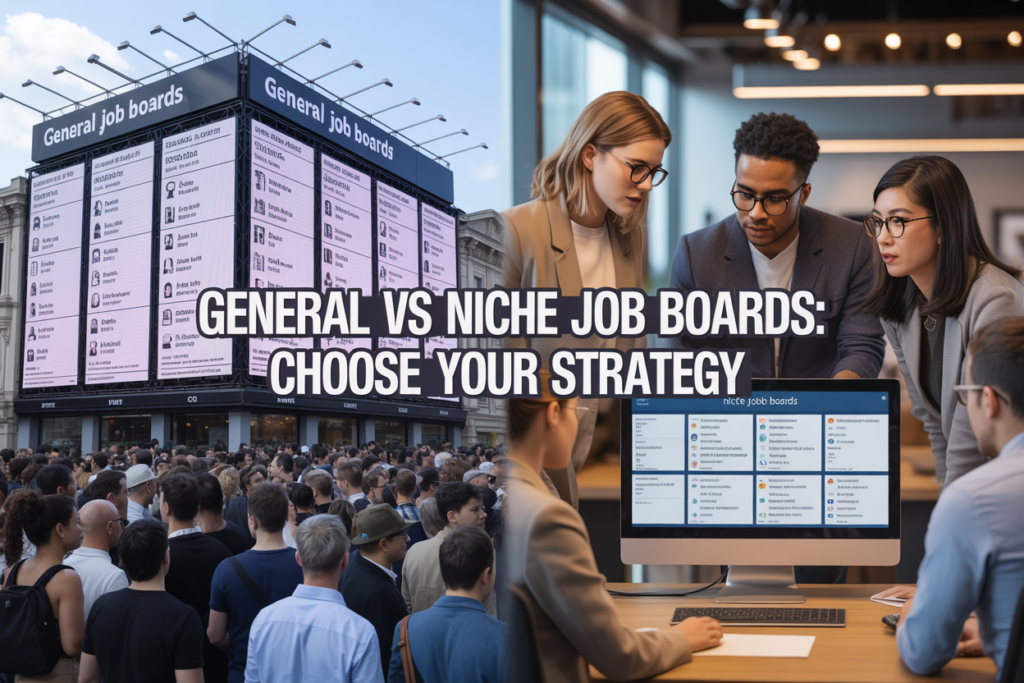
Choosing between general job boards and niche job boards can make or break your hiring success. This guide is for HR professionals, recruiters, and hiring managers who want to maximize their job posting strategy while getting the best return on their recruitment budget.
You’ll discover how general job board advantages, like massive reach, compare to niche job board benefits, such as laser-focused targeting. We’ll break down the real costs of different job posting sites and show you which platforms deliver the highest-quality candidates for your specific needs.
You’ll also learn how to match your targeted job recruitment approach to different role types and build a job board selection guide tailored to your company’s unique hiring goals.
Understanding General Job Boards and Their Strategic Advantages
Access to massive candidate pools across all industries
General job boards offer unmatched reach when you’re looking to cast a wide net for talent. Platforms like Indeed, Monster, and LinkedIn aggregate millions of active job seekers from every conceivable field and experience level. This massive scale means you’ll connect with candidates who might never have found your company through industry-specific channels.
The diversity of talent pools on general job boards creates unexpected opportunities. You might discover a marketing professional with an engineering background who brings a fresh perspective to your technical team, or find a career changer whose transferable skills perfectly match your needs. These platforms break down silos between industries, giving you access to unconventional candidates who could be game-changers for your organization.
Cost-effective posting options for high-volume recruitment
When you need to fill multiple positions quickly, general job boards deliver exceptional value for your recruitment budget. Most platforms offer bulk posting discounts, subscription packages, and tiered pricing that scale with your hiring volume. A single post can generate hundreds of applications, making the cost per candidate remarkably low compared to specialized recruitment methods.
The transparency of pricing on these platforms helps with budget planning and comparison shopping. You can test different posting strategies, track performance metrics, and adjust your approach without significant financial risk. For startups and growing companies managing tight budgets, this cost efficiency often makes the difference between successful scaling and missed opportunities.
Built-in filtering tools to streamline candidate selection
Modern general job boards have evolved far beyond basic resume databases. They now include sophisticated screening capabilities that help you identify qualified candidates before manually reviewing applications. Location filters, experience requirements, education levels, and salary expectations can be set upfront, automatically sorting through thousands of applications.
Advanced search functions let you find candidates with specific keywords, skills, or certifications mentioned in their profiles. Some platforms even use AI-powered matching algorithms that suggest candidates based on job requirements and company preferences. These tools dramatically reduce the time spent on initial screening while improving the quality of your candidate shortlist.
Established brand recognition that attracts passive job seekers
The household names in job boards have built trust and habit among both active and passive job seekers. Professionals regularly browse these platforms even when they’re not actively searching, creating opportunities to reach talented individuals who might not be responding to headhunters or checking niche sites. This browsing behavior means your job postings can capture attention from candidates who weren’t necessarily looking but become interested when they see the right opportunity.
These platforms also benefit from strong SEO presence and mobile accessibility, making your jobs discoverable through general web searches. When someone googles job opportunities in your city or industry, general job boards frequently appear in top results, extending your reach beyond the platform’s direct user base.
Exploring Niche Job Boards and Their Targeted Benefits
Highly qualified candidates with specialized skill sets
When you choose niche job boards over general platforms, you’re tapping into communities of professionals who’ve already self-selected based on their expertise. These specialized platforms attract candidates who are passionate about their field and actively seek opportunities within their specific industry. A software developer browsing Stack Overflow Jobs isn’t just looking for any position – they’re hunting for roles that match their technical stack and career aspirations.
The quality difference becomes apparent immediately. Instead of sifting through hundreds of generic applications, you’ll receive submissions from candidates who understand your industry’s unique challenges, speak the technical language, and possess the exact certifications or experience you need. A biotech company posting on BioPharma Dive’s job board will attract molecular biologists who understand FDA regulations, not general lab technicians hoping to transition into a career.
This targeted approach saves tremendous time during the screening process. Candidates from niche job boards typically require less explanation about industry-specific requirements and can dive straight into discussing how their skills solve your particular challenges.
Reduced competition from unrelated industries
Niche job boards’ benefits extend beyond candidate quality to include a more focused competitive landscape. When you post on general platforms, your engineering position competes for attention alongside marketing roles, retail jobs, and administrative positions. This creates noise that can bury your listing or attract irrelevant applicants who apply to everything they see.
Specialized boards eliminate this distraction. Your cybersecurity role on InfoSec-Jobs.com competes only with other security positions, creating a more targeted environment where serious candidates can easily find and evaluate opportunities that align with their career path. The reduced competition means your job posting receives more focused attention from qualified professionals.
This focused environment also works in your favor from a cost perspective. Many niche job boards charge based on the quality of their audience rather than sheer volume, often resulting in a better return on investment than casting a wide net on general platforms.
Industry-specific features that enhance job matching accuracy
Targeted job recruitment becomes more effective when platforms understand your industry’s unique requirements. Niche boards often incorporate specialized filters and features that general platforms can’t match. A healthcare job board might include filters for specific certifications, licensing requirements, or specializations that would be meaningless on a general platform.
These platforms also understand industry-specific terminology and requirements. A finance-focused board knows the difference between CFA and CPA certifications, while a tech board understands the nuances between front-end and full-stack development roles. This precision helps candidates self-select more effectively and ensures your requirements are clearly communicated.
Many specialized platforms also offer enhanced matching algorithms that take industry-specific factors into account. A creative job board might weigh portfolio quality heavily, while an engineering board prioritizes technical certifications and project experience. This sophisticated matching improves the overall quality of applications you receive and increases the likelihood of finding candidates who truly fit your organizational needs.
Analyzing Cost Implications and Budget Optimization Strategies
Comparing pricing models between general and niche platforms
General job boards typically operate on straightforward pricing models that favor volume posting. Most major platforms like Indeed and LinkedIn charge per posting or offer subscription-based packages with multiple job slots. You’ll find costs ranging from $100 to $500 per posting on popular general boards, with bulk discounts available for companies posting regularly.
Niche job boards present a different cost structure entirely. Specialized platforms often charge premium rates – sometimes 2-3 times more than general boards – but justify this through their highly targeted audience. A tech-specific board might charge $800-1,200 per posting, while a healthcare recruitment site could demand even higher rates. Many niche platforms also offer membership models in which you pay an annual fee for unlimited postings within specific categories.
The key difference lies in reach versus relevance. General boards give you massive exposure but diluted targeting, while niche platforms provide laser-focused candidate pools at higher individual costs.
Calculating cost-per-qualified-candidate metrics
Savvy recruiters track beyond simple posting costs to measure actual recruitment efficiency. Calculate your cost-per-qualified-candidate by dividing total posting expenses by the number of candidates who meet your basic requirements and advance past initial screening.
General job boards often generate higher application volumes but lower qualification rates. If you spend $300 on a general board posting and receive 200 applications with only 15 qualified candidates, your cost per qualified candidate equals $20. Meanwhile, a $900 niche board posting might yield 40 applications, of which 20 are qualified, resulting in a $45 cost per qualified candidate.
The math shows that niche boards, despite higher upfront costs, can deliver better value when you factor in the time saved by screening unqualified applicants. Your internal recruitment costs – including HR time reviewing applications – significantly impact these calculations.
Maximizing ROI through strategic platform selection
Your job board strategy should align with specific role characteristics and urgency levels. High-volume, entry-level positions often perform better on general job boards where cost efficiency matters more than precision targeting. You can cast a wide net and handle higher screening volumes for roles with broad skill requirements.
Specialized positions requiring specific certifications, advanced degrees, or niche technical skills typically generate better ROI on targeted platforms. Software engineers respond better to Stack Overflow Jobs or AngelList, while healthcare professionals gravitate toward platforms like HealthJobsNationwide.
Consider a hybrid approach for hard-to-fill positions. Start with niche boards for quality candidates, then expand to general platforms if needed. This strategy balances cost control with candidate quality, preventing budget waste on platforms that don’t serve your specific needs.
Hidden costs that impact your recruitment budget
Beyond posting fees, several invisible expenses can derail your job board budget planning. Premium features like highlighted listings, featured placements, or resume database access often add 30-50% to base posting costs. Many platforms present these as “recommended” upgrades during checkout, creating unexpected budget overruns.
Administrative overhead varies significantly between platform types. General job boards typically require more time filtering irrelevant applications, while niche platforms demand higher upfront investment in crafting targeted job descriptions that resonate with specialized audiences.
Integration costs also matter. Some platforms charge extra for ATS connectivity, branded company pages, or analytics dashboards. Factor in your team’s time learning new platforms – niche boards often have steeper learning curves but may provide dedicated customer support that general platforms lack.
Don’t overlook renewal traps either. Many platforms auto-renew subscriptions or automatically extend postings, leading to charges for positions you’ve already filled—budget for these potential overages when planning your overall job posting cost comparison strategy.
Evaluating Candidate Quality and Skill Match Effectiveness
Time-to-hire improvements with targeted posting strategies
Posting on the right platform dramatically cuts down your time-to-hire. When you match your job posting strategy to your specific role requirements, you’ll see qualified candidates applying faster and in higher numbers. Niche job boards often deliver pre-qualified candidates who already understand the industry requirements, meaning you spend less time explaining basic job expectations during initial screenings.
General job boards work well for common positions where you need volume quickly. A marketing coordinator role might fill within days on Indeed or LinkedIn, while a specialized blockchain developer position could sit for weeks without attracting the right talent. The key lies in understanding where your target candidates actively search for opportunities.
Savvy recruiters track their time-to-hire metrics across different platforms. Companies using targeted niche job boards for technical roles report 30-40% faster hiring cycles than those using general boards. This happens because candidates on niche platforms come with better baseline knowledge and a genuine interest in the specific field.
Reducing screening time through better candidate alignment
The biggest time-saver in recruitment is attracting candidates who actually fit your requirements. When you post on relevant niche job boards, candidates self-select based on their expertise and career goals. This natural filtering process means your initial applicant pool contains fewer unqualified candidates.
Consider a cybersecurity role posted on both a general board and a specialized security job platform. The general board might generate 200 applications with varied backgrounds, while the niche board produces 50 applications from security professionals. Your screening team will spend significantly less time reviewing the smaller, more targeted pool.
Effective candidate alignment also reduces back-and-forth communication. Candidates from niche platforms typically understand industry terminology, salary expectations, and role requirements better than those from general boards. This shared knowledge base speeds up conversations and helps both parties make faster decisions.
Measuring application quality scores across different platforms
Quality metrics tell the real story about job board effectiveness. Track your application-to-interview ratios, interview-to-offer ratios, and new hire retention rates by platform. These numbers reveal which boards deliver candidates who succeed long-term in your organization.
Create a simple scoring system that weights factors such as relevant experience, required skills, and cultural fit indicators. Rate incoming applications on a 1-10 scale within the first 24 hours of posting. You’ll quickly notice patterns showing which platforms consistently deliver higher-quality candidates for different role types.
Monitor cost-per-quality-hire rather than cost-per-hire. A niche board might charge more upfront but deliver candidates who interview better, accept offers faster, and stay longer. These candidates often require less training and reach productivity goals sooner, making the higher initial investment worthwhile.
Regular analysis of your candidate quality scores helps refine your job board strategy over time. You might discover that specific niche boards work exceptionally well for mid-level positions but fall short for entry-level roles, or that general boards excel for customer service positions but struggle with technical roles.
Determining Your Optimal Job Board Strategy Based on Role Requirements
High-volume positions that benefit from general board exposure
General job boards work best when you need to fill multiple positions quickly or recruit for typical roles like customer service representatives, sales associates, or administrative assistants. These platforms give you access to massive candidate pools – LinkedIn alone has over 900 million users worldwide, while Indeed processes millions of job applications daily.
The key advantage here is volume and speed. When you’re hiring for retail positions during holiday seasons or staffing call centers, casting a wide net makes perfect sense. Your best job posting sites for high-volume recruitment include Indeed, LinkedIn, and ZipRecruiter because they attract job seekers who actively browse across industries.
Consider a retail chain opening five new locations. Posting on general job boards allows them to reach candidates who might not think to search niche retail job sites. The broader appeal of these platforms means faster application flow and shorter time-to-fill metrics.
Specialized roles requiring niche platform targeting
Technical positions demand targeted job recruitment through specialized platforms. Software developers respond better to Stack Overflow Jobs or GitHub Jobs, while healthcare professionals actively use sites like Health eCareers or Nurse.com. The benefits of niche job boards include pre-qualified candidates who already possess industry knowledge and relevant skills.
Marketing professionals frequent MarketingJobs.com, and finance experts browse eFinancialCareers. The quality of candidates on these platforms tends to be higher because job seekers specifically choose these sites based on their career focus.
A biotech company searching for a senior research scientist will find more qualified candidates on BioPharma Dive Jobs than on general platforms. The specialized nature of these roles requires industry-specific knowledge that general job board users might lack.
Senior-level positions demanding industry-specific networks
Executive and senior-level recruitment requires an entirely different approach. These candidates rarely browse general job boards and instead rely on industry connections and specialized networks. Professional associations, industry publications, and executive search firms become your primary channels.
For C-suite positions, platforms like ExecuNet and BoardProspects target senior executives. Industry-specific networks like Oil & Gas Job Search for energy executives or BioSpace for pharmaceutical leaders provide access to passive candidates who aren’t actively job hunting.
Senior professionals value discretion and targeted opportunities. They respond to personalized outreach through professional networks rather than public job postings. Your job board strategy for these roles should focus on quality over quantity.
Entry-level opportunities with broader appeal potential
Entry-level positions offer the most flexibility in your job board selection guide. Recent graduates and career changers actively search across multiple platforms, making general job boards highly effective. College career centers, campus job boards, and sites like CollegeRecruiter.com specifically target this demographic.
The broader appeal potential means you can successfully use both general and niche approaches. A marketing coordinator role might perform well on Indeed while also attracting qualified candidates through MarketingJobs.com. This flexibility allows for cost-effective recruitment strategies.
New graduates often explore multiple career paths, so they search beyond their degree field. An engineering graduate might consider project management roles, making general job boards valuable for capturing this crossover interest.
Creating hybrid approaches for maximum recruitment success
Savvy recruiters combine general and niche job board strategies for optimal results. Start by analyzing your specific role requirements, budget constraints, and timeline pressures. A hybrid approach might involve posting specialized roles on niche platforms while simultaneously using general boards to capture unexpected but qualified candidates.
Consider a 70-30 split for technical roles – allocate 70% of your budget to niche platforms and 30% to general boards. For administrative positions, reverse this ratio. Track application sources and quality metrics to refine your approach over time.
Test different combinations for each role type. A UX designer position might perform well on Dribbble and Behance (niche) and on LinkedIn (general). Monitor which sources produce the best candidates and adjust your job posting cost comparison accordingly.
The most successful recruitment strategies adapt to results rather than rigid formulas. Your optimal approach will depend on your industry, company size, geographic location, and specific role requirements.
General job boards cast a wide net and give you massive reach, while niche boards connect you with candidates who already have the specific skills and passion for your industry. The choice really comes down to what you’re hiring for and how much time you want to spend sorting through applications. If you’re filling typical roles like sales or admin positions, general boards will flood you with candidates at a lower cost per post. But when you need specialized talent – think software developers, healthcare professionals, or marketing experts – niche boards deliver pre-qualified candidates who actually understand what you’re looking for.
Savvy hiring managers don’t pick just one approach. Mix general boards for volume hiring and urgent fills, then use niche platforms when you need that perfect skill match. Keep track of where your best hires come from, and don’t be afraid to experiment with different boards until you find what works for your company. The goal isn’t to post everywhere – it’s to post where the right people are actually looking.
Expanding your recruiting reach starts with automation that simplifies multi-channel posting. Explore our Google for Jobs, ZipRecruiter, and Handshake integrations to boost exposure, and browse the Job Boards category for strategies that enhance job performance. Whether you’re hiring hourly staff or professional talent, Job Multiposter and Job Distribution streamline automation and drive better recruiting outcomes.


